
How to Preserve Old Books: Complete Care Guide
How to preserve old books is a set of practical steps—controlling light, humidity, temperature, handling, and storage—to protect fragile pages, covers, and bindings for years. It helps you keep treasured books readable while reducing mold, fading, tears, and paper brittleness.
Old books need thoughtful care because small changes in their environment can cause lasting damage. A clear routine makes preservation manageable, whether you own a family Bible, a signed first edition, or an everyday favorite. Physical Book Archiving is the organized process of documenting and storing books safely, while a Book Rating and Review System can help you record condition and personal notes. Choosing Acid-Free Paper—paper made without damaging acids—for repairs and protective materials can prevent further deterioration.
In the guide ahead, we explain how to assess condition, clean safely, choose storage, and handle repairs without compromising your collection. At BookMack, we support practical organization and lending, so your books remain accessible and cared for.
Fundamentals of Physical Book Archiving
Physical Book Archiving is the practice of preserving, documenting, and safely storing printed books so their condition, history, and usefulness endure. You generally should not throw away old books: assess their condition, value, and sentimental importance first, then choose conservation, donation, or responsible recycling.
We recommend inspecting for loose pages, damaged covers, stains, odors, inscriptions, or deterioration. Avoid tape or improvised repairs, especially on valuable editions. Record title, author, publication information, and ownership history. Collectors can use a first-edition identification guide before judging its value.
Preventive preservation—proper storage, environment, and handling—is the most effective, economical way to extend a book’s life, according to the Library of Congress preservation guide. Recycle irreparably damaged, unsafe, or unrecoverable books; otherwise preserve, donate, or consult a conservator.
Environmental Controls: Temperature, Humidity, and Light
Keep old books in a cool, dark, stable environment: aim for about 65–70°F and 45% relative humidity Smithsonian Libraries guidance. For most books, maintain humidity no higher than about 55%; levels above 60% raise the risk of warping and mold Library of Congress guidance.
Practical controls
Place shelves away from radiators, vents, kitchens, bathrooms, windows, and direct sunlight. Use a hygrometer to notice changes early, and close curtains or UV-filtering shades during bright daylight. Mold can begin growing on wet materials within 48 hours, sometimes sooner NEDCC emergency salvage guidance, so respond quickly to leaks.
| Preservation factor | Recommended practice | Main risk reduced |
|---|---|---|
| Temperature | Keep the environment cool and stable, ideally about 65–70°F | Heat-related deterioration |
| Relative humidity | Aim for about 45% and keep it no higher than about 55% | Warping and mold |
| Light | Use a dark location, curtains, or UV-filtering shades | Fading and light damage |
| Location | Keep shelves away from radiators, vents, kitchens, bathrooms, and windows | Heat, moisture, and leak exposure |
Environmental controls and the book damage risks they help reduce.
A book rating and review system is a simple record for tracking each book’s condition, including fading, odor, or moisture exposure. For vulnerable covers, consult these archival jacket cover methods and update your record after environmental changes.
Proper Shelving and Storage Practices for Collectors
We recommend storing old books upright on sturdy, supportive shelves rather than stacking them, protecting bindings from unnecessary pressure General Preservation Strategies by Object Type. Keep shelves away from direct sunlight, radiators, vents, and leak-prone areas.
Shelving and protective materials
Choose shelves suited to each book’s height without forcing covers against surfaces. Leave room to remove volumes easily: press neighboring books aside or push the target book from behind rather than pulling its spine. Acid-Free Paper is paper made without damaging acids that can cause paper to yellow and weaken over time. Use it to separate fragile pages or wrap loose covers, never tightly. Never apply tape to valuable books; amateur repairs may reduce their value Information on Old Books. Explore our preservation and storage guide.
Safe Handling Techniques to Prevent Binding Damage
Handle old books with clean, dry hands, full support, and gentle movements; never tug the spine or force them flat. We protect hinges, joints, sewing, and fragile leather through careful handling, not improvised repairs.
Support every movement
Support covers with soft supports or folded acid-free material. Open as the binding allows; turn pages from the outer edge, not the gutter. To remove a book, press neighboring volumes aside and push it forward; pulling the spine damages it, according to Smithsonian guidance.
Relative Humidity is the moisture level in air compared with the maximum it can hold at a given temperature. Keep stable, no higher than about 55%; levels above 60% increase warping and mold risk (Library of Congress guidance). Avoid tape and heat; tape repairs can reduce a valuable volume’s worth (Smithsonian advice). Use book grading terms.
Managing Deterioration: Acid Degradation and Mold Prevention
We limit moisture, heat, light, and acids and act quickly when dampness or visible mold appears. Archival storage means materials and conditions designed to protect collection items over time; we use it for vulnerable books and consult a conservator about valuable-book damage.
Reduce acid damage
Acidic paper yellows and brittles. We separate volumes, use enclosures, and avoid tape or DIY repairs. Add book ownership labels to records identifying copies needing attention.
Prevent mold
We keep humidity at or below about 55%; levels above 60% increase warping and mold risk, according to the Library of Congress preservation guide. If wet, blot the book, separate pages, and circulate air. Mold can grow on wet materials within 48 hours, NEDCC reports. If air-drying within two days fails, freezing can inhibit growth while arranging help.
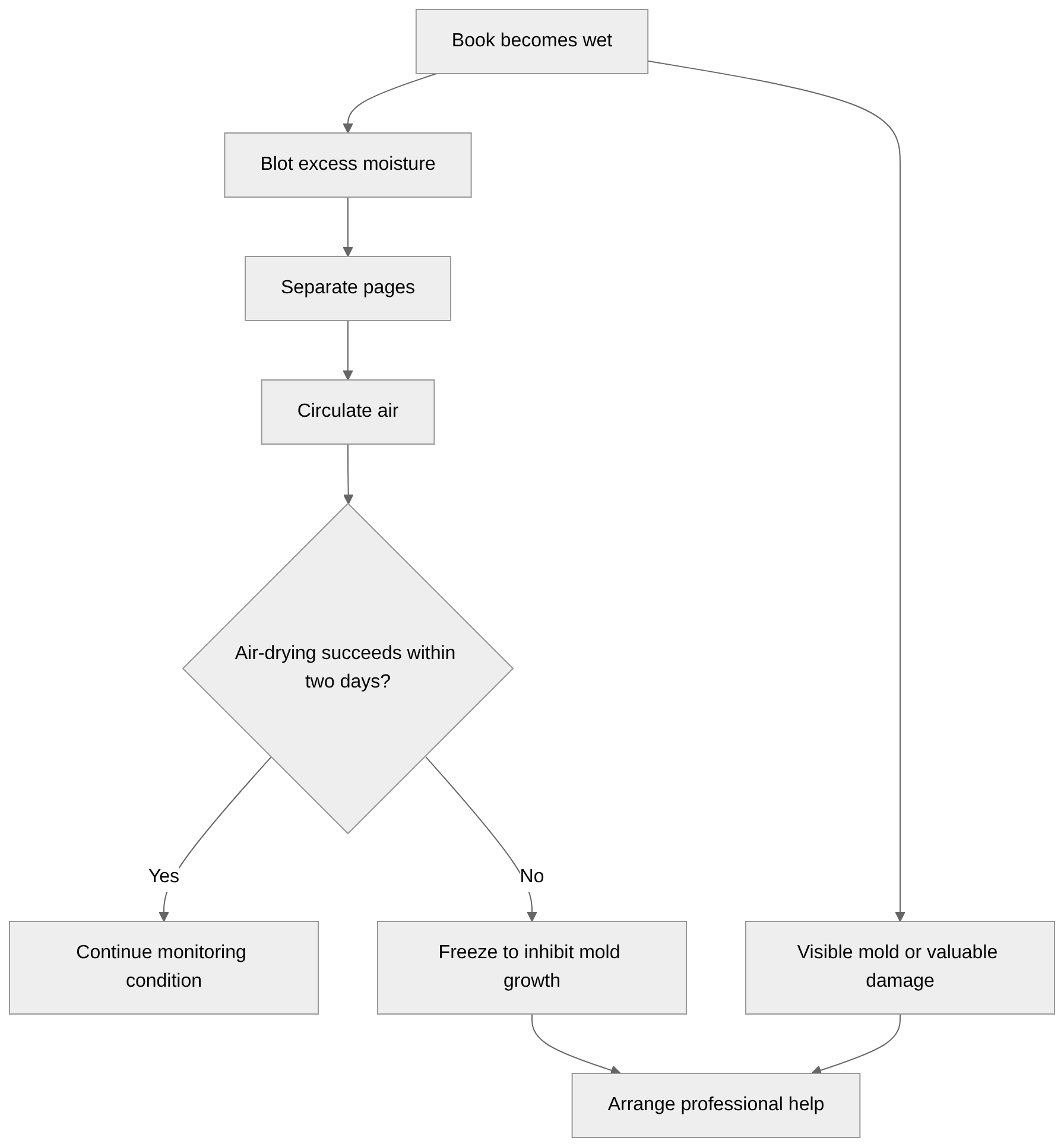
Emergency response sequence for wet books and possible mold growth.
Archival Supplies and Protective Enclosures
We recommend acid-free, lignin-free tissue, folders, and custom-fitted boxes to shield books from dust, abrasion, light, and handling. Enclosures should support books without squeezing boards or forcing spines open.
Choosing Protective Materials
Clamshell boxes suit fragile volumes; polyester or polypropylene sleeves protect dust jackets, photographs, and documents. Avoid PVC plastics, rubber bands, ordinary cardboard, and pressure-sensitive tape, which may transfer chemicals or leave residue. Never tape historically or financially valuable books: Smithsonian guidance warns amateur repairs can reduce value (Information on Old Books).
| Protective material or enclosure | Suitable use | Important caution |
|---|---|---|
| Clamshell box | Fragile volumes | Fit snugly without squeezing boards or forcing the spine open |
| Polyester or polypropylene sleeve | Dust jackets, photographs, and documents | Use a nonrestrictive fit for easy removal |
| Acid-free, lignin-free tissue or folders | Shielding books from dust, abrasion, light, and handling | Support weak boards without tightly wrapping them |
| PVC plastics, rubber bands, ordinary cardboard, or pressure-sensitive tape | Not recommended for archival protection | May transfer chemicals, leave residue, or damage valuable books |
Protective enclosures compared by suitable use and preservation cautions.
Applying Enclosures Safely
Use a snug, nonrestrictive fit for easy removal. Support weak boards with acid-free tissue. Preventive preservation—good storage, environment, and handling—is the most effective, economical protection (Research Guides: Preserving Your Books: Introduction). For valuable collections, document condition before enclosure; review this collection-value guide.
Cataloging and Documenting Preservation Status
Create a preservation record for each book, noting identity, condition, location, environment, and treatment. Update it after inspection or movement. Consistent records reveal changes early and guide decisions about professional advice.
What to record
Give each volume a unique ID, title, author, edition, publication date, provenance, and photos of its cover, spine, pages, and marks. Record loose pages, stains, odors, insect activity, fading, cracked hinges, and leather deterioration; do not repair. Add location and inspection date; label entries stable, watch, or urgent.
Keep records useful
Write factual observations, preserve earlier entries, and note humidity or leak incidents. Attach receipts or conservator reports. Our BookMack catalog keeps details alongside lending history; privacy controls help decide what others can see. Review valuable books and document changes before and after handling.
Frequently Asked Questions
What is the ideal temperature and humidity for book archiving?
The optimal environment for physical book archiving requires a temperature between 60°F and 70°F and relative humidity between 30% and 50%. Consistent environmental controls prevent mold formation, paper brittleness, and structural decay, ensuring long-term preservation of paper, bindings, and covers.
How should rare or fragile physical books be stored?
Fragile and rare books require upright placement on flat, sturdy shelves without leaning. Large or heavy volumes must rest flat to prevent hinge strain. Using acid-free archival boxes and custom book jackets shields volumes from environmental pollutants, ultraviolet light exposure, and mechanical abrasion.
Conclusion
Learning how to preserve old books starts with careful handling, clean surroundings, and supportive storage. Keep temperature and humidity stable, limit light exposure, and use shelves that support books upright without crowding. Archiving fundamentals—such as gentle cleaning, protective enclosures, and regular checks—help you identify problems before they become costly. With these habits, your collection can remain readable and meaningful for years. At BookMack, we also value simple organization and privacy-conscious tools that make it easier to track and lend your books responsibly. Start with one shelf today, then build a preservation routine that keeps every story within reach.