
How to Arrange Books on Shelves: Systems and Classification Methods
How to arrange books on shelves is the process of grouping and ordering your collection so each book is easy to find and your space feels inviting. A useful system may sort books by author, genre, subject, size, color, or reading status, depending on how you use them.
An organized home library saves time, protects books from awkward stacking, and makes it easier to notice what you own. A classification system is simply a way of deciding where each book belongs, while book cataloging is the process of recording useful details such as title, author, and edition. Together, they help you create shelves that look intentional without making your collection difficult to change. We’ll also consider practical choices for growing collections, lending, privacy, and keeping track of books with BookMack, so you can choose an arrangement that fits your reading habits. Start with the method that makes finding your next book easiest.
Core Principles of Home Bookshelf Organization
A well-organized home bookshelf should make books easy to find, pleasant to browse, and simple to return to the right place. Start with a maintainable system and adapt it as your collection changes.
A home library is a personal collection of books organized for reading, reference, or enjoyment in your living space. Gather books and group them. Keep frequently used titles at eye level, heavier books on sturdy lower shelves, and space for additions. Choose one primary rule—such as subject, genre, or author—and apply it consistently.
Give each shelf a purpose and use a shelf location guide when books span rooms. Keep loaned titles in one visible area so returns are easy to process. Review the arrangement periodically: remove duplicates, reduce crowded sections, and move favorites where you naturally look first. The best system supports your routines.
Popular Bookshelf Classification Methods
Useful bookshelf classification methods include alphabetical, genre-based, subject-based, chronological, color-based, Dewey Decimal, and Library of Congress systems. Choose one primary rule, then apply a simple secondary rule to find and return every book easily.
A classification system is a consistent set of rules for grouping and locating books. Genre or subject groups related books; alphabetical order suits broad collections, while chronology fits history, biographies, or series. Color-based displays look inviting but can hinder retrieval.
Dewey Decimal numbers group similar topics Of Note: Registering the Dewey Decimal System at the Library of Congress. Library of Congress uses subject letters and numbers; its call number identifies a book’s shelf location What's a call number and how do I use it?. Explore these small-space bookshelf ideas.
| Classification method | Best use or consideration |
|---|---|
| Alphabetical | Suits broad collections and supports quick retrieval by author or title. |
| Genre-based | Groups related reading categories, such as fiction, biography, history, and cooking. |
| Subject-based | Organizes books around topics, such as gardening or botany. |
| Chronological | Fits history, biographies, or series and can show how ideas develop. |
| Color-based | Creates an inviting display but can make retrieval harder. |
| Dewey Decimal | Groups similar topics using numbers. |
| Library of Congress | Uses subject letters and numbers to identify a book’s shelf location. |
Comparison of bookshelf classification methods and their most practical uses.
Arranging Books by Genre and Subject Matter
Arrange books by genre and subject to create intuitive sections, such as fiction, biography, history, and cooking. Keep each section together, then sort by author or title for easier browsing.
Book cataloging is the process of recording and organizing a book’s details—such as title, author, subject, and genre—so you can locate it easily.
Use broad genres first, then narrower subjects: place “fiction” before “mystery” and “historical mystery,” or “nonfiction” before “gardening” and “botany.” Label shelves or use removable tabs, and keep related series together. If editions vary, review our hardcover and paperback guidance.
Seven distinct books can be arranged in 7! ways: 7 × 6 × 5 × 4 × 3 × 2 × 1 = 5,040. If genre grouping matters, arrange groups first, then order books within each group; apply the same rule consistently.
Alphabetical and Chronological Shelf Systems
We arrange books alphabetically by author or title, or chronologically by publication date or historical period. We choose a method that makes books easy to find and apply it consistently within each section.
Alphabetical order
For fiction and nonfiction, we use an author’s surname, then sort titles alphabetically. For anthologies or books without a clear author, we use the first meaningful title word, ignoring “the” or “a.” Series stay together in volume order; a shelf label clarifies the pattern.
Chronological order
Publication dates suit history, art, science, and collected works, showing how ideas develop. In mixed collections, we group by subject, then alphabetize. If genre is the main grouping, this genre shelving guide can help.
Visual Organization: Color, Height, and Format
Arrange books visually by choosing one cue—color, height, or format—and apply it consistently. Grouping by appearance makes collections easier to scan, but easy access matters more than a perfect display.
Use visual cues practically
Color grouping suits decorative shelves but can make titles harder to find. Keep author or genre zones intact, arranging spines by color within each. For height, place taller volumes at the ends or create a gentle rise and fall with stable support. Group oversized art books and paperbacks separately to avoid gaps.
If your collection feels overwhelming, start with this TBR organizing guide before styling shelves. Keep frequently borrowed books at eye level, record your chosen order in our catalog, and reassess after adding books to keep the system practical.
Maintaining and Cataloging Your Home Library Inventory
Our home library inventory stays useful when we record each book’s title, author, subject, location, and lending status, review it regularly, and update the shelf after every change.
Keep your catalog current
We start with a catalog. When books move, we update shelves. We record call numbers consistently: a Library of Congress call number can identify a book’s specific shelf location (What’s a call number and how do I use it?).
At BookMack, we track friend loans, recording each borrower, loan date, and expected return. We remind borrowers, compare our catalog with the physical collection, correct duplicates, and flag missing or damaged books.
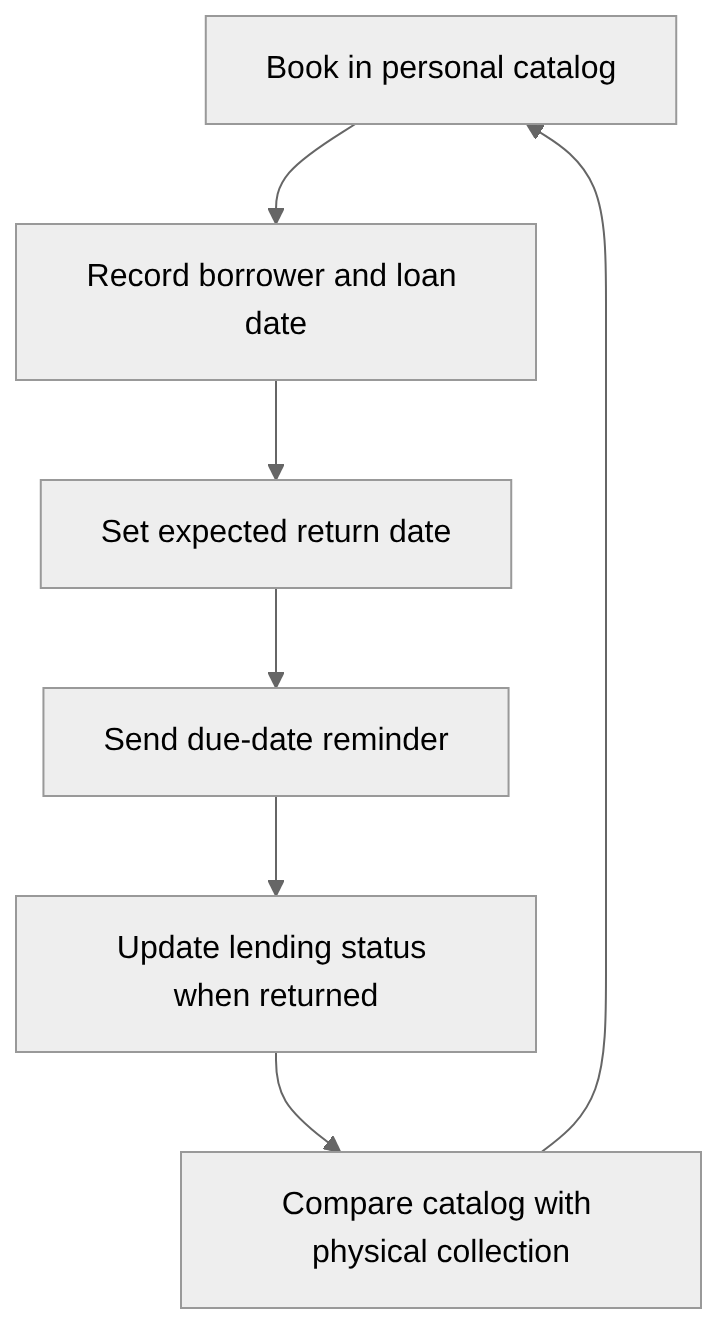
Book lending workflow from catalog entry through return and inventory review.
Physical Storage and Preservation Guidelines
To arrange books safely, keep most upright with firm support, protect them from moisture and sunlight, and leave room for removal. Good storage prevents warped covers, faded spines, and damaged pages, keeping our collection pleasant to use.
Protecting Books on the Shelf
Use sturdy, non-sagging shelves, placing heavy books on lower levels; bookends should support books without pressing tightly. Store oversized or heavy books flat in short stacks that do not strain lower volumes. Keep books away from radiators, leaks, damp rooms, and sunlight. Dust shelves and bindings with a cloth; avoid products and moisture. Check for insects, mildew, loose pages, or cracked spines; separate affected books. When lending, record each book’s condition and use protective covers for frequently handled copies. Privacy-conscious records protect returns without exposing personal information.
| Storage practice | Purpose or precaution |
|---|---|
| Store most books upright with firm support | Helps prevent awkward stacking and keeps books easy to remove. |
| Place heavy books on lower shelves | Uses sturdy lower support and reduces strain on higher shelves. |
| Store oversized or heavy books flat in short stacks | Prevents strain on lower volumes. |
| Keep books away from moisture and sunlight | Helps prevent warped covers, faded spines, and damaged pages. |
| Dust shelves and bindings with a cloth | Removes dust without using products or moisture. |
| Separate books with insects, mildew, loose pages, or cracked spines | Prevents affected books from remaining with the collection. |
Practical bookshelf storage practices for protecting books and maintaining a usable collection.
Frequently Asked Questions
What is the best way to organize a home bookshelf?
The optimal method depends on personal reading habits. Common effective approaches include organizing alphabetically by author for quick retrieval, grouping by genre or subject matter, or categorizing by reading status and format.
How do you categorize books in a personal library?
Personal libraries are categorized using standard subject classifications, alphabetical sorting by author surname, or tailored systems such as custom tags, reading priorities, and publication formats.
Should paperbacks and hardcovers be shelved together?
Paperbacks and hardcovers can sit together if subject grouping is preferred, or separated by height and trim size to optimize vertical shelf space and preserve structural book integrity.
Conclusion
Knowing how to arrange books on shelves turns a crowded collection into a useful, welcoming part of your home. Start with practical principles: choose accessible heights, group books consistently, and leave room for growth. Then select a classification method that suits you, whether that means arranging by genre, subject matter, author, color, or reading status. The best system is one you can maintain and enjoy using. Review your shelves as your collection changes, and consider a simple lending solution from BookMack to keep track of shared books while respecting your data privacy. With a thoughtful system in place, finding—and returning to—your next great read becomes effortless.